

1th March, 2026


1th March, 2026
Organizations pour substantial resources into developing their people yearly. The expectation is straightforward: stronger capabilities, sharper performance, and a workforce ready to tackle tomorrow’s challenges. Yet when leadership teams review the results, the numbers often tell a different story. The promised leap in performance rarely materializes.
This disconnect is not random. In many cases, it stems from structural flaws in how training programs are designed and delivered. Beneath the surface lies a gap between polished theories and the messy realities of day-to-day operations.
Understanding those hidden cracks is the first step toward fixing them. When organizations rethink how learning connects to real work, training stops being a cost center and begins to behave like a true investment.
Healthy learning environments recognize something simple yet powerful: employees do not start from the same place. Still, many organizations rely on standardized development templates as if every participant shares the same background, pace, and professional needs. On paper, this approach looks efficient. In practice, it often leads to the quiet collapse of engagement.
Employees may sit in the room, but mentally, they have already checked out. For experienced professionals, the content feels painfully basic. For newcomers, it can feel overwhelming and difficult to follow—either way, learning stalls.
Generic training also creates a barrier between theory and application. Instead of equipping employees with tools they can immediately use, programs deliver abstract concepts that rarely survive the transition back to real work.
Two operational patterns often drive this failure.

When development plans drift away from strategic priorities, training slowly loses its purpose.
This misalignment often happens when HR departments design programs independently from operational and financial leaders. Each group works with good intentions, yet the connection between learning and business outcomes fades.
Training rooms become places where employees complete required hours, collect certificates, and move on. Meanwhile, the organization’s biggest challenges remain untouched.
For development to matter, it must be tied directly to where the company is headed. Learning should strengthen the exact capabilities the organization needs for its next stage of growth.
Without that alignment, even the most polished program becomes little more than a well-organized distraction.
One of the most effective ways to close this gap is a strategy known as Backward Design. Instead of starting with existing training materials, this model begins with the final result the organization wants to achieve. Leadership defines the desired outcome first. That outcome might involve increasing sales, reducing operational errors, or improving customer retention.
Only after that destination becomes clear does the design process move backward to build the learning experience that can actually deliver it.
This simple shift changes everything. Training stops being about delivering information and starts becoming a tool for measurable performance improvement.
According to research from the Association for Talent Development (ATD) in its 2024 reference report, programs built around outcome-driven design generate roughly three times the return of traditional training models.
The contrast between the two approaches is striking. The following table highlights the key differences between the two approaches:
|
Comparison Aspect |
Traditional Programs (Old Methodology) |
Backward Design Model (Modern Methodology) |
|
Starting Point |
Available content and pre-built curricula |
Desired operational and financial outcomes |
|
Primary Focus |
Completing required training hours |
Creating behavioral change aligned with company goals |
|
Evaluation Language |
Satisfaction surveys about the venue and hospitality |
Organizational performance indicators and sales metrics |
In the race to build technical expertise, many organizations overlook the human side of performance.
The assumption is simple: if employees master the tools, success will follow.
Reality often proves otherwise. Organizations frequently promote high-performing technical specialists into leadership roles based solely on their expertise. Once in those positions, many struggle with the emotional and interpersonal demands of leading teams.
Technical skill may open the door, but emotional intelligence determines whether someone can truly lead.
Two patterns tend to reveal this imbalance.
In many organizations, training resembles a single event that burns bright for a moment and then disappears. A workshop happens. Employees feel energized. New ideas circulate through the room.
Then everyone returns to their desks, and daily pressures quietly erase the momentum.
Without reinforcement, most new knowledge fades quickly. What felt inspiring during the session gradually dissolves into memory.
To prevent this cycle, organizations must abandon the idea that development is a one-day experience. Skill building behaves more like physical fitness. Progress comes from repetition, feedback, and steady practice over time.
Two structural shifts make this possible.
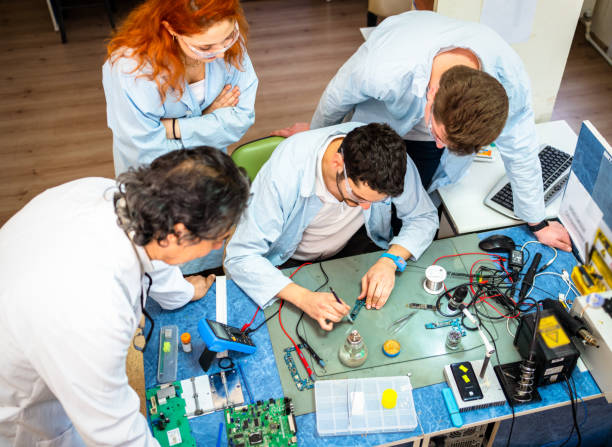
Many organizations struggle to evaluate whether their training investments actually work.
The problem is rarely a lack of data. It is the kind of data being collected.
Too often, departments rely on simple satisfaction surveys that ask participants about the venue, the food, or the overall experience. Those details might reflect how pleasant the event felt, but they say almost nothing about whether performance improved.
This measurement gap quietly drains organizational resources. Without meaningful metrics, leadership teams cannot see whether development efforts are delivering real value.
Building a stronger evaluation system requires three disciplined practices.
Fixing employee development is not about running more workshops or hiring more trainers. It requires a deeper shift in how organizations think about learning.
Training must connect directly to strategy, reflect the real needs of teams, and continue long after the classroom session ends.
Companies that make this shift begin to see a different pattern emerge. Learning no longer disappears after a few weeks. Instead, it spreads through daily work, shaping behavior and strengthening performance over time.
That transformation rarely happens by accident. It begins when leaders treat development not as an annual activity but as a core engine of organizational growth.
For companies ready to take that step, starting with Backward Design can be a powerful first move. By defining the outcome before designing the program, organizations turn training from a hopeful expense into a deliberate investment.
And when that shift happens, the training budget finally starts behaving less like a cost and more like a growth strategy.
Not necessarily. In many cases, the problem lies within the organizational environment itself. When employees lack opportunities to apply new knowledge or when programs are disconnected from strategic goals, even excellent trainers struggle to create lasting impact.
AI can analyze organizational data to identify skill gaps with remarkable precision. It can also deliver personalized micro-learning experiences tailored to each employee’s needs at exactly the right moment.
The most urgent issue is the belief that training is a one-time event. Without follow-up and practical application, even the best-designed programs fade quickly and fail to produce lasting change.
This article was prepared by trainer Mazen Al Drdar, an ITOT certified coach.
ITOT
Help
Log In

ILLAFTrain Accredited Provider – The CPD Certification Service CPD UK
ILLAFTrain Registered Provider: UKRLP – UKPRN: 10099126
© 2026 Illaftrainoftrainers